
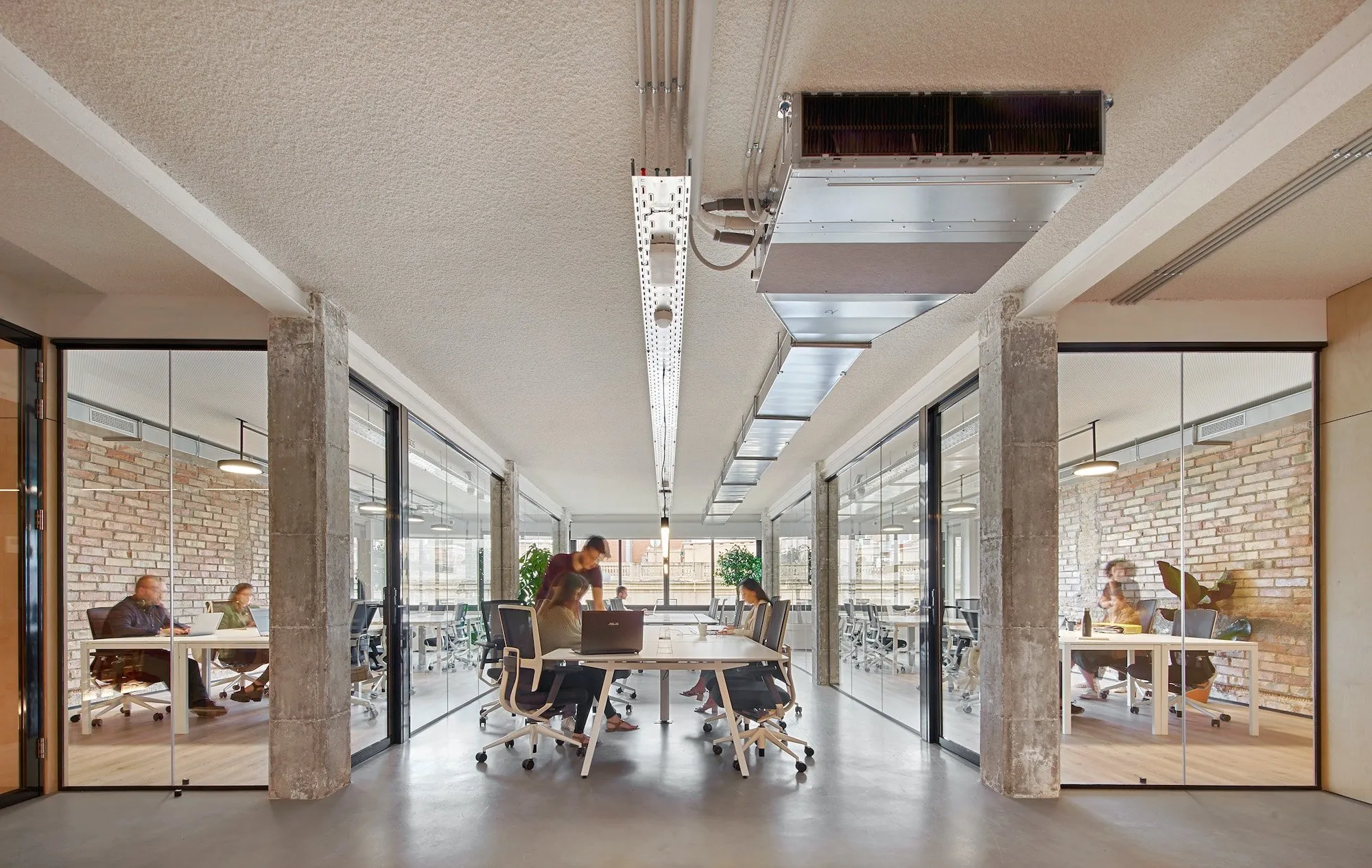
Returning back to the office after a holiday is that moment when we swap days without alarm clocks and leisurely meals for schedules, emails, and meetings. It’s not always easy: the shift in pace can affect both body and mind. However, with the right planning, this return can be an opportunity to get organised, re-establish healthy habits, and start the new work period with renewed energy.
There’s also another kind of back to the office worth discussing in this article: the return after leaving behind a flexible working arrangement. Here, you’ll find key strategies for both scenarios and tips to make your return far more pleasant.
What does “back to the office” mean?
Back to the office refers to the process of returning to in-person, hybrid, or coworking work after a period of leave, most commonly holidays. It’s not just about “sitting back at your desk”; it’s about readjusting to a set schedule, routine, and professional environment.
This transition varies depending on the length of the break, the nature of the job, and how we organise ourselves. Some people need a couple of days to get back into gear, while others adapt in a matter of hours.
In recent years, with the rise of remote and flexible work models, “back to the office” can also mean a company’s decision to end hybrid systems and return to a fully in-person model.
Differences between returning after long or short holidays
- Long holidays: the shift in pace is greater, and it may take more effort to focus again.
- Short holidays: adaptation is often quicker, although the sense of rest and disconnection may also be less.
Positive effects of returning to a structured work routine
Coming back with a clear plan can boost productivity, reduce stress, and help maintain the good mood we regained during our break.
How to ease back into work routines gradually
After holidays, it’s unrealistic to think you’ll be back at full speed in a single day. Gradual adaptation allows both mind and body to adjust better.
Some useful strategies include:
- Starting with easier tasks to “warm up”.
- Dedicating the first few days to organising and prioritising.
- Adjusting your sleep schedule a few days before returning.
Organisation techniques for the first days back
Tools like the Eisenhower Matrix or the Two-Minute Rule can help you prioritise and reduce mental overload.
Prioritising tasks by urgency and importance
Not all tasks are equally critical; identifying the most important prevents you from spreading yourself too thin and improves efficiency.
Habits to maintain well-being when back to the office
Going back to work shouldn’t mean giving up self-care. Keeping a healthy balance is key to better performance and feeling good.
- Active breaks and stretches: standing up every hour to move improves circulation and reduces muscle tension.
- Healthy eating at work: choosing balanced meals and avoiding excessive caffeine helps maintain steady energy levels.
- Hydration and natural light: drinking water regularly and making the most of daylight improves mood and focus.
The other “back to the office”
The return to the office after remote work is a change that, although it may seem simple, is about more than just moving your laptop from home to the company desk. It means readjusting to a physical environment, more structured schedules, and face-to-face interaction we may not have experienced for months — or even years.
If managed well, this process can bring benefits for both productivity and workplace well-being.
What going back to the office after remote work involves
Returning to a physical workplace after a remote period means reconnecting with team dynamics, resuming in-person routines, and reorganising daily logistics. It’s not just a change of location, but also a change of mindset.
Common changes include:
- Readjusting to set start and finish times.
- Increased daily commuting time.
- More direct communication, but less flexibility than remote work.
- Ergonomic adjustments to your workstation.
Benefits of returning to the office:
- Stronger teamwork and cohesion.
- Better communication and problem-solving.
- Clearer separation between work and personal life.
Can your employer require you to return to the office?
In most cases, yes, but it depends on factors such as your contract, current labour laws, and whether any agreements were made during your remote work period.
In Spain, remote work is regulated by Law 10/2021 on distance working. This law states that unless remote work was explicitly included as a condition in your contract or in a formal agreement, the company can require you to return to the office, provided it respects:
- The notice period agreed upon or stated in the collective agreement.
- The pre-established working conditions (hours, duties, salary).
- Health and safety measures in the workplace.
If remote work was an exceptional measure (for example, during the pandemic), the company has the right to return to in-person work.
Cases where you may not be required to return:
- If you have a signed remote work agreement specifying the arrangement as permanent or indefinite.
- If there are medically justified reasons against in-person work, supported by documentation.
- If your collective agreement clearly limits mandatory in-person attendance.
- Practical tip: before accepting or refusing to return, review your contract, collective agreement, and any signed remote work documents. If in doubt, consult a union representative or labour lawyer.
How to adapt better to the return to in-person work
- Adopt an open attitude.
- Keep certain productive habits from remote work.
- Plan your logistics (commute, meals, schedules).
Is a hybrid model recommended?
Yes, in many cases, hybrid offices allow you to combine the flexibility of remote work with the benefits of in-person collaboration.
How to maintain productivity in the office
Organise your tasks, avoid unnecessary interruptions, and use focus techniques like the Pomodoro Method.
Keys to a smoother transition
Switching from remote work to the office gradually can ease the impact.
Recommendations:
- Adjust your sleep schedule a few days beforehand.
- Plan your first week with room for unforeseen events.
- Maintain healthy routines (breaks, hydration, stretches).
- Take care of ergonomics at your workstation.
Keeping positive remote work habits in the office
Returning to the office doesn’t mean losing what worked well from home. You can keep:
- Time-blocking to organise your day.
- Using digital tools to optimise processes.
- Active breaks to move and rest your eyes.
Helping your company with the back to the office transition
Returning to the office after remote work or holidays can be challenging, especially if you’re looking for a space that fits your team’s new needs. Finding the right one isn’t always as simple as it seems: location, services, flexibility, and budget all matter.
What if you need to combine fixed desks for some employees with a flexible workspace to encourage collaboration?? Or if you want a location with excellent transport connections and all-inclusive services so your team can focus on what truly matters?
At Offices Finder, we take care of the entire process to make your back to the office move quick, straightforward, and perfectly tailored to how you work. We analyse your requirements, filter through all the market options, and negotiate the best terms so you can settle into your new space knowing you made the right choice.
Going back to the office is more than just occupying a desk: it’s about creating an environment where your team can grow, collaborate, and perform at their best. And that’s where we make the difference.
Conclusion on going back to the office
The back to the office moment doesn’t have to feel like an uphill climb. With good organisation, healthy habits, and the right environment, this return can be an opportunity to improve how we work.
Preparing the transition, taking care of well-being, and relying on the right tools make the whole process easier and more positive.

